Photo Gallery
Experimental Studies of the Nanoripples
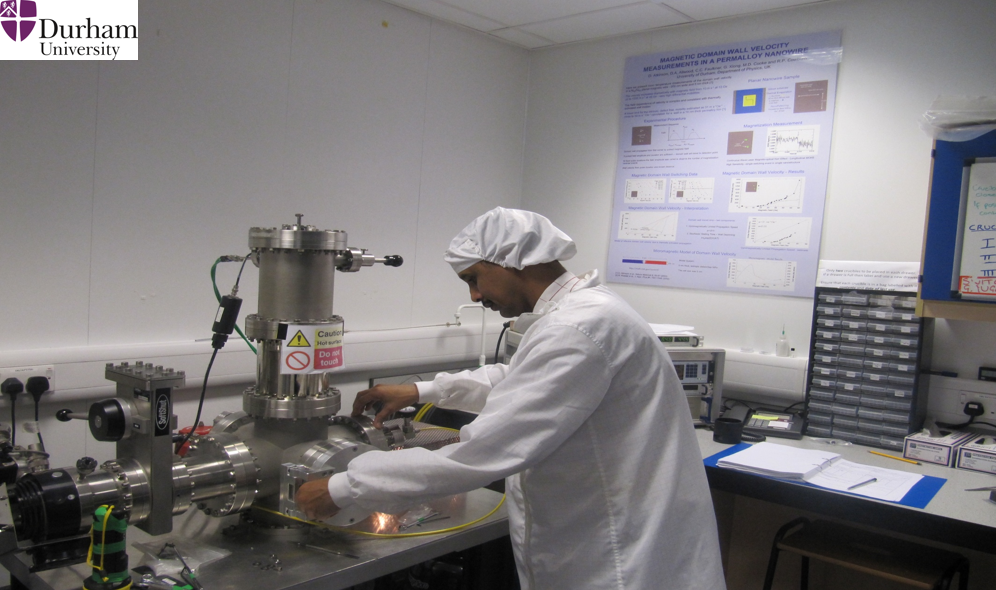 Growing the thin film samples at a home-made High Vacuum Thermal Evaporation system, housed in a Clean-Room Lab in the Physics Department, Durham University, UK |
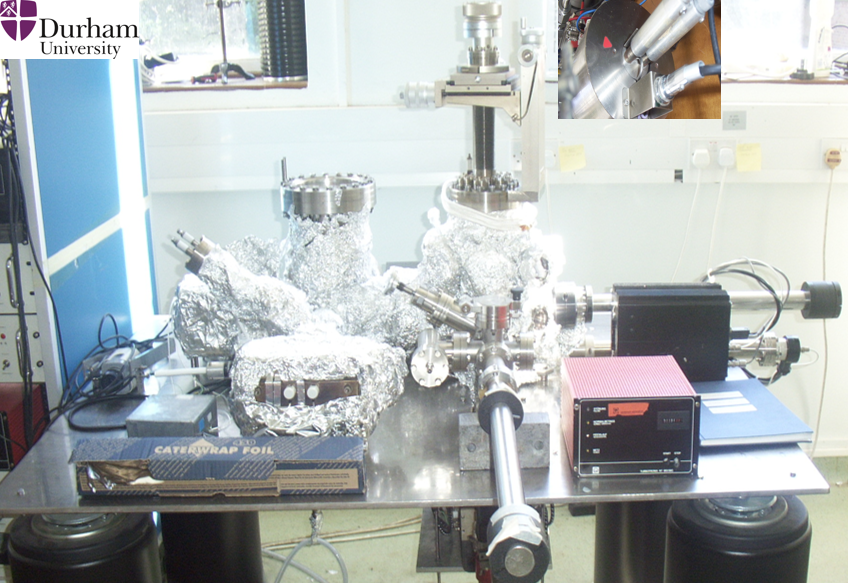 Sputtering the samples at a custom-designed UHV Ion Beam system was located in the Physics Department, Durham University, UK |
Numerical Studies of the Nanoripples using HPC "Hamilton 8" at Durham University, UK
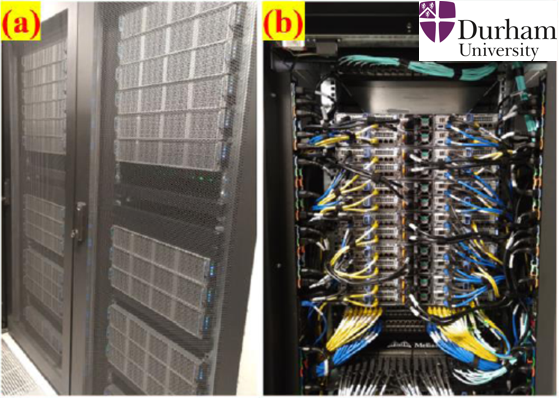 Two racks of the "Hamilton 8" Supercomputer: (a) 4 nodes per chassis and (b) High performance network switch (Infiniband HDR 200 GB/s high performance interconnect) |
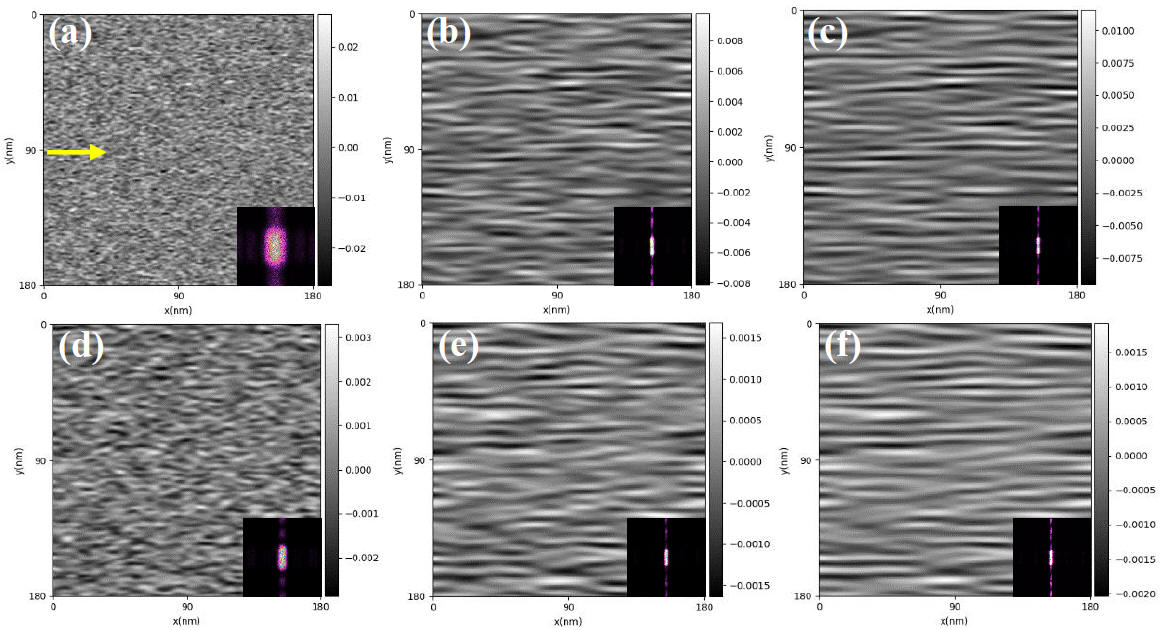

Numerical solutions for the real space surface height function, h(x, y, t) obtained from numerical solution of the above equation using physically-derived parameters presented at selected iterations (time). Ni surfaces for (a) 1000 cycles (early in the smoothing process), (b) 46100 cycles (at the valley iteration time, tdip), (c) 92200 cycles (at the time, tmin). Cu surfaces: (d) 1000 cycles (early in the smoothing process), (e) 10000 cycles (at tdip), (f) 20000 cycles (at tmin). The ripples are formed in the perpendicular mode as indicated by their orientation with respect to the arrow in (a) which defines the projection of the ion beam path onto the surface. Insets show FFTs of the height functions with spots appearing upon the development of periodicity.
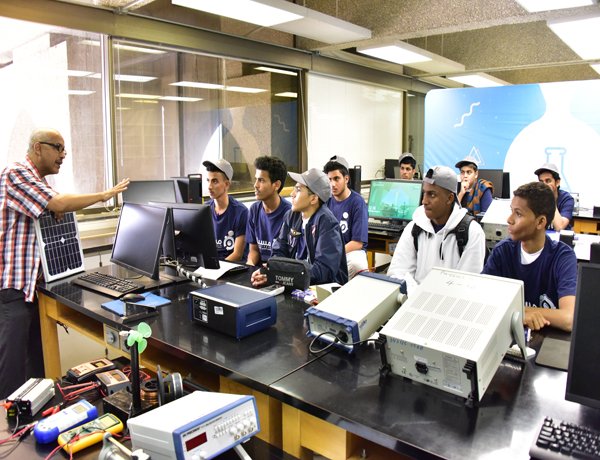
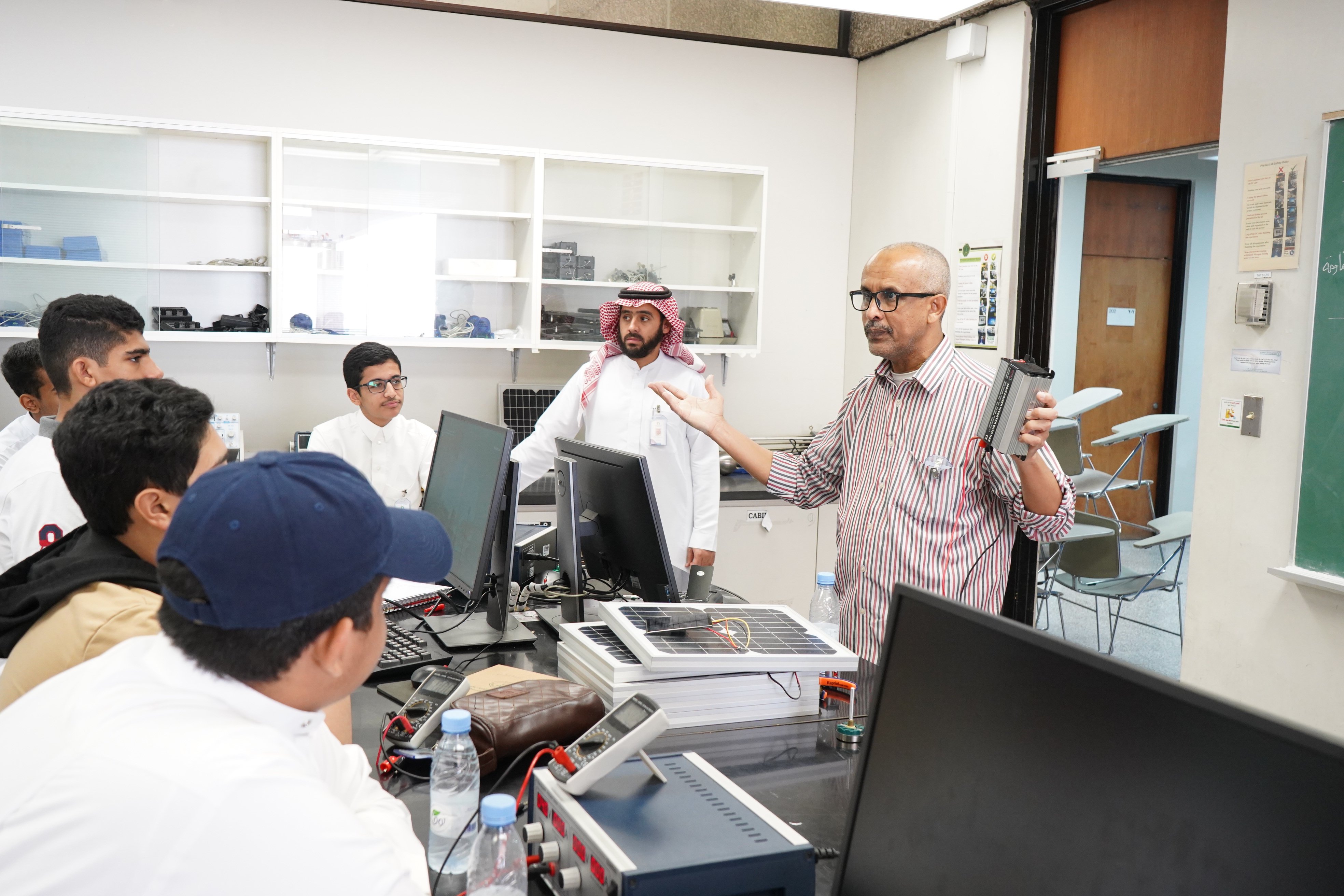
Previous teaching Renewable Energy course for Mawhiba's Students
 |
 |
 |
 |